The Cost of Poor Queue Management: What Businesses Are Losing
26 May 2026
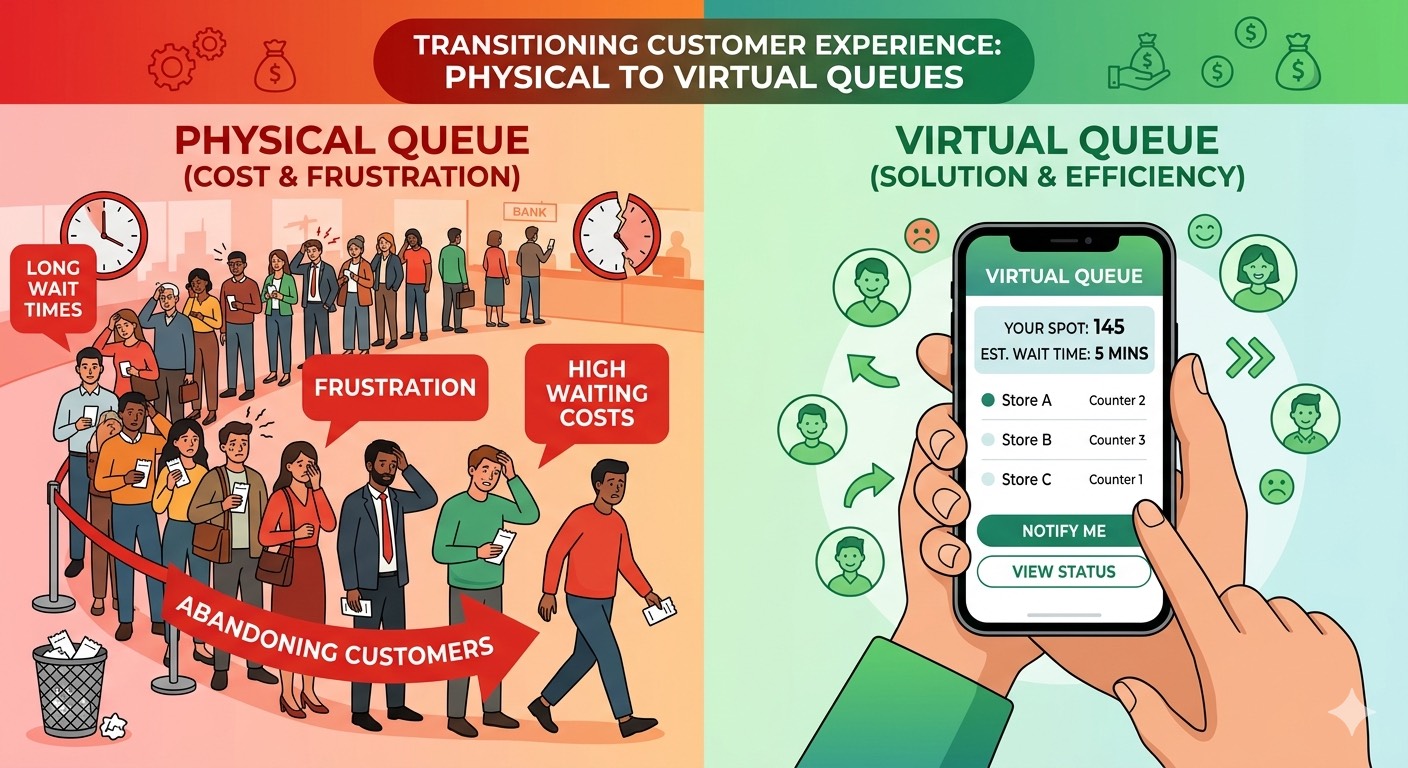
According to Wavetec, 86% of consumers have left a store due to long lines, contributing to an estimated $37.7 billion in potential annual revenue loss for U.S. retailers alone. That figure does not account for the compounding costs: lost repeat visits, staff burnout, negative reviews, and the operational drag of queues that nobody is actively managing. Poor queue management is not an operational inconvenience — it is a quantifiable financial leak affecting every service industry from retail to healthcare to government.
This article breaks down exactly what that leak looks like in numbers, where it hits hardest, and what it actually costs when businesses leave it unaddressed.
Queue Abandonment Rates: The Revenue Walking Out the Door
Abandonment is the most immediate and measurable cost of a poorly managed queue. When customers leave before being served, that transaction is almost never recovered.
In retail, the data is stark. According to QueueAway’s 2026 retail queue statistics, 32% of shoppers abandon purchases specifically because of long lines, and 86% say waiting in line is their biggest in-store frustration. Crucially, 73% of shoppers report that queue length directly influences where they choose to shop — meaning poor queue management is actively driving customers toward competitors before they even enter a store.
The financial math is straightforward. As analyzed by Queberry, a retail location serving 500 customers per day with a 22% abandonment rate loses roughly 110 transactions daily. At a conservative $50 average basket value, that is $5,500 per day — or approximately $2 million per year — from a single location. Scale that across a multi-site retail chain and the number becomes existential.
In healthcare, abandonment takes a different form. The clinical equivalent — patients who leave without being seen (LWBS) — is one of the most closely tracked quality metrics in emergency and outpatient settings. A peer-reviewed quasi-experimental study published in PMC found that implementing a structured queue management intervention reduced mean actual waiting time from 27.03 minutes to 15.5 minutes, and perceived waiting time from 32.8 minutes to 11.9 minutes. The reduction in patient walkaway rates and stress levels was statistically significant. For healthcare providers operating under value-based reimbursement models, patient satisfaction scores tied to wait times have direct revenue implications.
In banking and government services, the mechanism differs again — customers do not always walk out, but they switch channels permanently. Up to 75% of potential customers leave due to excessive waits across service environments, according to FasterLines. For a bank branch, one defection to digital-only banking or a competitor represents not a single lost transaction but the lifetime value of that customer relationship.
Quantified Revenue Loss: What Each Abandoned Customer Actually Costs
The aggregate numbers are large enough to lose meaning. The per-customer revenue loss is more useful for operational decision-making.
Qminder’s analysis places the global cost of negative shopping experiences — the majority of which are queue-driven — at an estimated $71 billion in abandoned retail sales annually. Breaking that down by market: UK retailers lose approximately £11.3 billion per year to long queues, Singapore retailers lose over $1.6 billion, and Hong Kong retailers absorb up to $2.35 billion in deterred sales. These are not projections — they reflect actual spending that did not occur because a customer encountered a line they were unwilling to join.
Beyond the immediate lost transaction, there is the lifetime value multiplier. Research cited by Wavetec shows that 77% of consumers are less likely to return to a store after experiencing long checkout lines. If the average customer visits 20 times per year and spends $50 per visit, a single queue-abandonment event that triggers non-return represents $1,000 in lost annual revenue — from one customer. Across thousands of customers, the compounding effect is severe.
QueueAway’s data adds an additional operational dimension: increasing queue length from just 10 to 15 people can reduce sales conversion by up to 10%. This means the damage begins long before a customer formally abandons the queue — the visible length of a line suppresses purchase intent even among customers who stay.
Staff Productivity: The Hidden Labor Cost of Mismanaged Queues
The financial impact of poor queue management extends beyond lost customer revenue. It damages workforce productivity and drives up labor costs through a mechanism that is less visible but equally costly.
When queues are unpredictable and unstructured, frontline staff spend disproportionate time managing customer frustration rather than delivering service. According to Queberry, 68.5% of retail workers regularly deal with frustrated customers as a direct result of long wait times. This is not a minor friction point — it is chronic occupational stress that accumulates into burnout and turnover.
The turnover cost is where the numbers become significant. Queberry estimates that replacing a single retail employee costs upward of $15,000 when accounting for recruitment, training, and productivity loss during the ramp period. For a 20-person operation with elevated turnover driven by queue-related stress, that translates to $300,000 or more in annual labor replacement costs — a figure that dwarfs the cost of implementing a modern queue management system.
Wavetec corroborates this: poor queue management directly increases employee burnout and operational costs, creating a feedback loop where understaffed or overwhelmed teams produce slower service, which generates longer queues, which produces more frustration, which accelerates turnover.
Effective queue management breaks this cycle by redistributing staff workload according to real-time demand, enabling smarter scheduling decisions, and reducing the volume of queue-related customer complaints that staff must absorb on the floor.
Reputational Damage: When Wait Times Become Public Record
Customer dissatisfaction from long queues does not stay in the store. It migrates to review platforms, social media, and word-of-mouth channels where it influences potential customers who have never visited.
The behavioral data is consistent: 73% of shoppers say long queues influence where they choose to shop, according to QueueAway. A customer who has a poor queue experience and leaves a one-star review citing wait times does not just reflect their own lost visit — they actively redirect future customers. For businesses in competitive catchment areas, this creates a measurable competitive disadvantage that compounds over months and years.
Healthcare providers face a structurally similar dynamic. Patient satisfaction surveys — including CMS-administered HCAHPS scores — explicitly measure wait time perceptions, and poor scores affect both reputation and, in value-based care models, reimbursement rates. The PMC study on queue management in outpatient settings found that structured queue management produced significant improvements in both objective wait times and subjective patient satisfaction — the latter being precisely what drives public ratings.
Government service agencies and DMV-style operations face perhaps the harshest reputational exposure: wait time complaints at public service points generate media coverage, constituent complaints, and institutional credibility damage that private businesses can partially offset with pricing or marketing. For public agencies, queue management is reputation management.
Industry-Specific Cost Breakdown at a Glance
The cost profile differs meaningfully by sector:
Retail: The most quantified sector. Revenue loss is direct and immediate — abandoned baskets, deterred shoppers, reduced conversion rates. The $37.7 billion U.S. estimate and £11.3 billion UK estimate frame the macro picture; at the individual store level, a 22% abandonment rate on 500 daily visitors translates to approximately $2 million in annual lost revenue.
Healthcare: Costs manifest as LWBS rates, rebooking costs, patient satisfaction penalties, and in value-based models, direct reimbursement impact. A structured queue intervention can cut wait times by more than 40%, with material improvements in patient retention and satisfaction scores.
Banking and Financial Services: Losses concentrate in customer lifetime value. A branch customer who defects due to wait time frustration may represent $10,000–$50,000 in lifetime revenue, depending on product relationships. Queue dissatisfaction also accelerates branch-to-digital migration at a pace that outstrips service infrastructure investment.
Government and Public Services: Americans spend 37 billion hours annually waiting in lines across public and private service environments, per Qminder. For government agencies, the cost is measured in operational inefficiency, staff overtime, and institutional trust — none of which have easy financial proxies but all of which carry real budget consequences.
How Skiplino Eliminates These Costs Across Every Industry
The losses documented above are not inevitable — they are the predictable result of managing queues reactively rather than proactively. Skiplino is purpose-built to address each cost category described in this article.
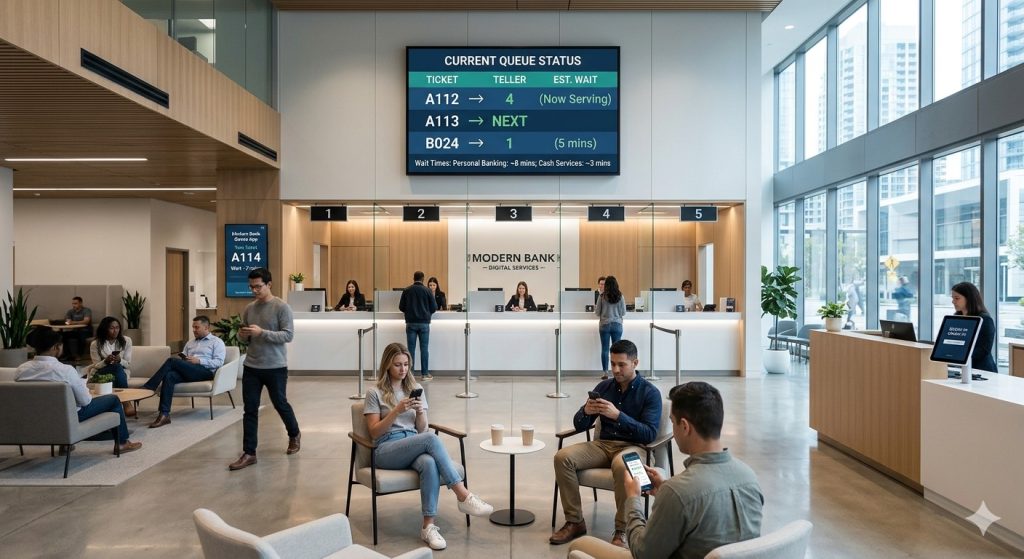
On abandonment: Skiplino’s virtual queuing system allows customers to join a queue remotely via mobile app, receive real-time position updates and accurate wait-time estimates, and return only when they are close to being served. This eliminates the primary driver of queue abandonment — the uncertainty and physical discomfort of standing in an unmanaged line. Businesses using Skiplino report wait time reductions of up to 75%, directly compressing the abandonment window.
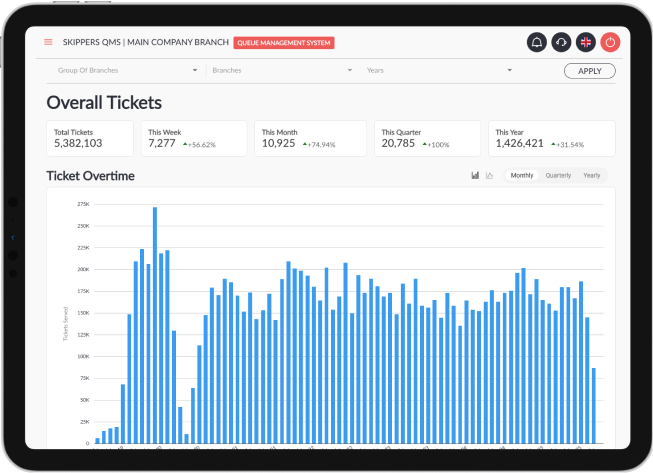
On revenue recovery: Skiplino’s analytics dashboard identifies peak demand periods, service bottlenecks, and drop-off points in the customer journey before they become revenue losses. Managers can reallocate staff in real time, not after the fact, converting potential abandoned transactions into completed ones.
On staff productivity: Automated SMS and push notifications handle customer communication without staff involvement, freeing frontline teams to focus on service delivery rather than queue management. Skiplino’s centralized multi-location dashboard gives managers visibility across all sites simultaneously, enabling proactive intervention rather than reactive firefighting.
On reputation: Customers who are kept informed, not kept waiting, do not leave frustrated. Skiplino’s appointment scheduling module reduces no-shows by up to 80% through automated reminders — a particularly high-value feature for healthcare providers and financial services firms where no-shows create cascading scheduling failures and revenue gaps.
Competitors including Waitwhile, Qminder, Qmatic, Wavetec, and WaitWell each address portions of this challenge — Qminder with strong analytics, Wavetec with kiosk infrastructure, WaitWell with hybrid walk-in and appointment management. Skiplino differentiates through the combination of mobile-first virtual queuing, enterprise-grade real-time analytics, rapid implementation (operational in under 10 minutes), and Virtual Branch capabilities that extend service delivery fully online — a unique capability for organizations managing both physical and remote service delivery.
The cost of poor queue management is measurable, industry-specific, and entirely preventable. If you are ready to quantify what your current queuing approach is costing your organization and see how Skiplino addresses it, explore Skiplino’s queue management platform or start a free account to see the impact for yourself.
Latest
Similar Reads
![Understanding a Visitor Management System [Step-By-Step Guide]](https://5012494.fs1.hubspotusercontent-na1.net/hub/5012494/hubfs/A-Guide-To-Visitor-Management-System.jpg "Understanding a Visitor Management System [Step-By-Step Guide]")

![Free vs. Paid Visitor Management Software [A Guide]](https://5012494.fs1.hubspotusercontent-na1.net/hub/5012494/hubfs/free-vs-paid-visitor-management-software.jpg "Free vs. Paid Visitor Management Software [A Guide]")
All Rights Reserved @2026 Skiplino Technologies WLL.


Hi!
What are you planning to do?