The Complete Guide to Healthcare Appointment Scheduling Software

4 Jun 2026
What’s Inside
- Introduction: Why Healthcare Scheduling Matters More Than Ever
- 5 Critical Problems With Traditional Medical Scheduling
- 5 Compelling Reasons to Switch to Online Scheduling Software
- Key Features of Healthcare Appointment Scheduling Software
- Streamlining Patient Flow & Managing Waiting Times
- Benefits by Healthcare Business Type
- Data Analytics & Performance Tracking
- Patient Privacy & Data Security
- Frequently Asked Questions
- Conclusion & Next Steps
Introduction: Why Healthcare Scheduling Matters More Than Ever
Going to the doctor is stressful. Nobody — patients or practitioners — will deny that. In fact, research shows that 15–30% of patients with measured high blood pressure in a medical environment experience “white coat syndrome,” where the mere act of seeing a doctor is enough to provoke elevated blood pressure. The stress of healthcare is deeply tied to our wellbeing, and it doesn’t start at the exam room door — it starts at the booking desk.
For decades, patients have endured an outdated scheduling experience: hours spent on hold, clunky online portals, missed appointments, and frustratingly long wait times. The average wait for a medical appointment in the United States exceeds 18 days, and 40% of patients would switch physicians for a shorter wait time. These aren’t just inconveniences — they’re barriers to care.
What is healthcare appointment scheduling software? Healthcare appointment scheduling software is a digital platform that automates and optimizes how patients book, reschedule, and manage medical appointments. It replaces traditional phone-based and manual scheduling systems with online self-service portals, intelligent queue management, automated reminders, and data analytics — all designed to improve patient experience and operational efficiency.
Modern healthcare scheduling software has emerged as a critical tool for hospitals, clinics, physical therapists, mental health counselors, and independent practitioners alike. These platforms don’t just make booking easier — they fundamentally transform the patient journey, reduce administrative burden, and unlock data-driven insights that help healthcare organizations perform better.
This complete guide covers everything you need to know: the problems with traditional scheduling, the benefits of going digital, the features that matter most, and how different types of healthcare businesses can leverage these tools for maximum impact.
5 Critical Problems With Traditional Medical Scheduling
The modern world is built around simple, accessible technology. Endless information is available at our fingertips. Products can be purchased with a few taps. So why is medical appointment scheduling still stuck in the past?
Traditional scheduling systems in healthcare typically come in one of two flavors: old-fashioned phone calls and clunky patient information portals. Neither serves patients or practitioners well. Here are the five critical problems that make traditional scheduling a liability.
Problem 1: Unacceptably Long Wait Times
Getting an appointment is hard enough even before considering scheduling logistics. From a provider’s perspective, it’s impossible to predict when phone calls will come in, meaning administrative staff struggle to keep up during peak hours. The result? Patients wait longer on the phone, wait longer for appointment dates, and wait longer in the lobby. Healthcare scheduling software can help patients book in minutes — no sitting on hold, no struggling with outdated login portals — and cut wait times without adding administrative labor.
Problem 2: Poor Personalization
Booking an appointment the traditional way rarely helps patients find the care they actually need. They aren’t given flexibility to choose specific practitioners, appointment durations, treatment methods, or communicate preferences and sensitivities. This is especially critical in holistic healthcare settings where multiple treatment options exist for a single condition. Patients deserve the ability to customize their experience — including how they book.
Problem 3: Lack of Privacy
Patients want their medical details kept confidential. Booking over the phone or via unsecured email feels unsafe — and for good reason. Sensitive information is exchanged out loud within earshot of strangers or transmitted through unsecured channels. Healthcare appointment scheduling software offers encrypted, secure data transmission through custom forms that go directly from patient to clinic with no compromise.
Problem 4: Inaccessibility
Ironically, old-fashioned booking makes appointments hardest to secure for those who need them most. Patients with urgent issues wait for hours on the phone. Homebound patients struggle to coordinate visits. Busy professionals can’t afford to spend their limited time on hold. Traditional scheduling lacks the flexibility that modern patients require.
Problem 5: No Performance Analysis
Processing appointments manually means nobody is analyzing visitor data. Without insights into wait times, customer feedback, demographics, and resource utilization, healthcare organizations have no roadmap for improvement. Studies show that 60% of organizations already use tools to monitor patient wait times — those who don’t risk falling behind competitors who do.
5 Compelling Reasons to Switch to Online Scheduling Software
Clearly, the traditional medical scheduler isn’t doing patients or practitioners any favors. The good news? Switching to a modern healthcare scheduling platform delivers transformative benefits. Here’s why making the move is worth it.
How does online scheduling software improve patient experience? Online scheduling software improves patient experience by eliminating phone wait times, offering 24/7 self-service booking, sending automated reminders to reduce missed appointments, providing real-time wait status updates, and enabling secure, private communication — all of which reduce anxiety and build trust.
Reason 1: Dramatically Reduce Wait Times
40% of patients are willing to switch physicians for a shorter wait time. Healthcare scheduling software reduces wait times by removing the burden of scheduling from staff and making it automatic. Patients book directly through a website or app without waiting for a return call. The benefits cascade: front desk staff can focus on patients who are physically present, no one waits on hold, and patients receive notifications when their provider is available — arriving just in time for their appointment rather than sitting in a crowded lobby.
Reason 2: Protect Patient Privacy & Data Security
Traditional scheduling methods create multiple privacy vulnerabilities — overheard phone conversations, misplaced files, insecure email transmissions. Online scheduling software addresses these issues with centralized, encrypted cloud storage; secure custom forms that transmit data directly from patient to provider; and homogeneous system architecture with fewer exploitable weaknesses.
Reason 3: Deliver Personalized Care
By 2022, personalized medical care was expected to comprise 40% of the healthcare market — and that trend continues to accelerate. Modern scheduling platforms capture patient profiles, treatment needs, and preferences through digital intake forms. This information enables practitioners to prepare tailored treatment plans before the patient even arrives, resulting in more effective, more satisfying care.
Reason 4: Improve Accessibility for All Patients
Accessibility isn’t something most patients can take for granted. Online scheduling improves access through intuitive interfaces that anyone can use in minutes, removing the need to interact with scheduling agents (a significant benefit for patients with social anxiety), sending automatic reminders to busy patients, and integrating with telemedicine platforms so patients can receive care from home. Direct communication features also reduce on-site traffic, giving providers more time for serious health issues.
Reason 5: Analyze Performance & Drive Improvement
Data-driven decision-making is the cornerstone of modern healthcare operations. Scheduling platforms deliver analytics on appointment patterns, no-show rates, resource utilization, patient feedback, and staff performance. These insights help administrators identify bottlenecks, optimize appointment slots, allocate resources effectively, and continuously improve the patient experience. 60% of healthcare organizations already monitor patient wait times with digital tools — data analysis is no longer optional.
Key Features of Healthcare Appointment Scheduling Software
Modern scheduling platforms pack a range of powerful features designed to address every pain point in the patient journey. Here are the capabilities that separate effective solutions from the rest.
📅 Online Appointment Booking
Patients schedule appointments from any device, 24/7. Self-service reduces phone volume and gives patients control over their time.
⚡ Smart Queue Management
Intelligent algorithms optimize patient flow based on appointment type, urgency, and service availability — minimizing gaps and bottlenecks.
📱 Automated Reminders & Notifications
SMS and email reminders reduce no-show rates. Real-time updates on appointment status reduce patient anxiety and improve attendance.
💻 Telemedicine Integration
Seamless virtual consultation capabilities allow patients to receive care remotely — critical for public health and accessibility.
🔐 Secure Data Management
Centralized cloud storage with encryption keeps patient records safe. Custom intake forms transmit data directly with no compromise.
📊 Analytics & Reporting
Comprehensive insights into appointment patterns, wait times, and resource utilization that drive continuous operational improvement.
🔄 Staff Allocation Optimization
Real-time demand data helps administrators deploy staff where they’re needed most, improving productivity and controlling costs.
🏢 Virtual Waiting Rooms & Contactless Check-In
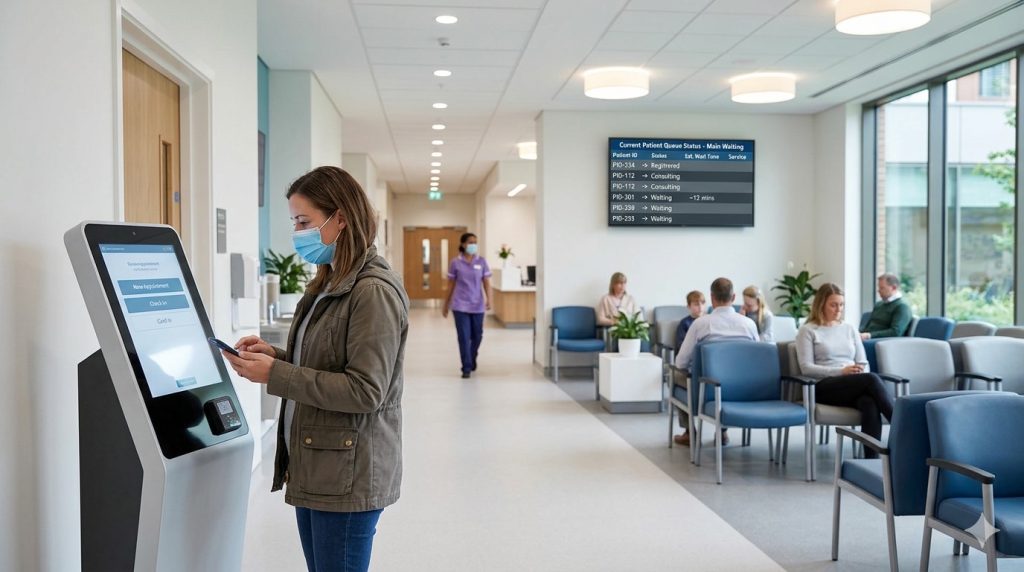
Patients check in from their phones, join virtual queues, and receive updates — minimizing physical crowding and improving safety.
Streamlining Patient Flow & Managing Waiting Times
Long queues and extended wait times don’t just frustrate patients — they impact the overall efficiency, morale, and reputation of healthcare facilities. Managing patient flow effectively is one of the highest-impact improvements a healthcare organization can make.
How can hospitals reduce patient wait times? Hospitals can reduce wait times by implementing online appointment booking (eliminating phone queues), using smart queue management algorithms to optimize patient flow, deploying real-time notifications so patients arrive at the right moment, analyzing data to identify scheduling bottlenecks, and utilizing virtual waiting rooms to decouple physical presence from queue position.
The Real Cost of Long Wait Times
Overcrowded waiting areas, inefficient scheduling, and lack of visibility into patient flow are the primary drivers of prolonged wait times. The consequences ripple through the entire organization: reduced patient satisfaction, lower staff morale, compromised health outcomes, and damage to the facility’s reputation. In an era where patients can research and choose providers with a few clicks, poor wait time management directly impacts the bottom line.
How Smart Scheduling Transforms Patient Flow
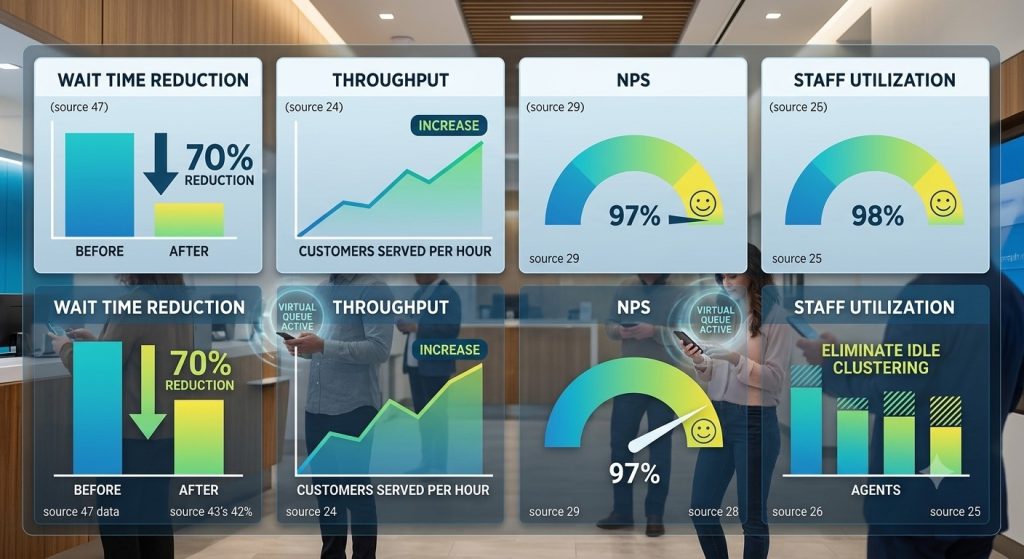
Modern queue management systems use advanced algorithms to optimize patient flow in real time. These systems consider appointment type, urgency, service availability, and provider schedules to minimize gaps between appointments and reduce idle time. Patients receive estimated wait times so they can plan their visit accordingly — creating a more predictable, less stressful experience.
For healthcare providers, the operational benefits are equally compelling. Staff resources can be allocated based on real-time demand, ensuring the right people are in the right place at the right time. This reduces overtime costs, improves staff satisfaction, and ultimately allows clinicians to spend more time on patient care and less on administrative coordination.
Benefits by Healthcare Business Type
Different healthcare organizations have different scheduling needs. A hospital’s requirements differ significantly from those of a solo physical therapist or a mental health counselor. Here’s how scheduling software delivers value across common healthcare business types.
🏥 Hospitals & Clinics
Hospitals and clinics need to manage large volumes of patients while securely storing sensitive data. Key features include online booking, queue management, vaccination scheduling, contactless check-in, virtual waiting rooms, telemedicine integration, post-discharge follow-up, and robust analytics. The primary goals are improving cross-departmental efficiency and reducing wait times across the board.
💪 Physical Therapy Practices
Physical therapists often work with patients recovering from surgery or injury who need consistent, ongoing care. Valuable features include patient personalization, independent session booking, insurance authorization tracking, payment integration, and telemedicine for remote follow-ups. An effective scheduler helps therapists keep patients on track with their recovery plans.
🥗 Medical Advisors (Nutritionists, Dietitians, Fitness Coaches)
Medical advisors often work independently and may offer creative service formats like group courses or events. Ideal scheduling software supports online booking, event scheduling, personalized sessions, telemedicine, payment processing, and analytics. The right platform allows advisors to fill their calendars without being bogged down by administrative work.
🧠 Mental Health Therapists
Mental health professionals — psychiatrists, psychotherapists, counselors — increasingly deliver care online to support patients’ busy schedules. Key features include provider search, telemedicine integration, patient personalization, independent session booking, and automated reminders. The focus is on integrating seamlessly into patients’ lives and providing consistent support between sessions.
Data Analytics & Performance Tracking
One of the most powerful — and often overlooked — capabilities of healthcare scheduling software is data analytics. The ability to measure, understand, and act on operational data separates high-performing healthcare organizations from the rest.
What can healthcare scheduling analytics tell you? Scheduling analytics can reveal appointment patterns and peak demand periods, no-show rates and their root causes, resource utilization (are providers fully booked or sitting idle?), patient demographics and preferences, staff performance metrics, and customer satisfaction trends — all of which inform smarter operational decisions.
Metrics That Matter
Effective scheduling platforms track a range of key performance indicators:
- Appointment wait times — from booking to visit date, and from arrival to see the provider
- No-show rates — and the effectiveness of reminder systems in reducing them
- Resource utilization — are appointment slots being used efficiently?
- Patient satisfaction scores — gathered through post-visit digital surveys
- Staff performance — identifying training needs and optimization opportunities
With this data, healthcare administrators can pinpoint scheduling bottlenecks, optimize appointment slot allocation, adjust staffing levels based on demand patterns, and continuously improve the patient experience. Data-driven scheduling isn’t a luxury — it’s a competitive necessity in today’s healthcare landscape.
Patient Privacy & Data Security
In healthcare, privacy isn’t just a preference — it’s a legal and ethical obligation. Traditional scheduling methods create multiple points of vulnerability. Here’s how modern scheduling software addresses them.
Why Traditional Scheduling Falls Short on Privacy
- Phone bookings — conversations can be overheard in waiting rooms or common areas
- Email scheduling — unsecured email servers are vulnerable to interception
- Legacy systems — complex, outdated architectures offer more attack surfaces
- Paper records — easily misplaced, mis-sent, or accessed by unauthorized personnel
How Modern Software Protects Patient Data
- Encrypted cloud storage — centralized, secure, and HIPAA-compliant data management
- Secure custom forms — data transmits directly from patient to provider with no third-party exposure
- Role-based access control — staff only see the information they need to do their jobs
- Audit trails — every access to patient data is logged and traceable
The difference is clear: traditional methods treat privacy as an afterthought, while modern scheduling platforms build security into their architecture from the ground up.
Frequently Asked Questions
What is healthcare appointment scheduling software? It’s a digital platform that automates the process of booking, managing, and confirming medical appointments. It replaces manual phone-based scheduling with online self-service tools, smart queue management, automated reminders, and analytics — improving both patient experience and operational efficiency.
How does scheduling software reduce no-shows? By sending automated reminders via SMS and email — typically 24–48 hours before the appointment — and allowing patients to easily confirm, reschedule, or cancel. This reduces forgetfulness and gives providers time to fill canceled slots.
Can scheduling software integrate with my existing systems? Most modern healthcare scheduling platforms offer API integrations with EHR/EMR systems, billing software, telemedicine platforms, and practice management tools. The best solutions are built to fit into your existing workflow, not replace it.
Is online scheduling secure for sensitive medical data? Yes. Reputable healthcare scheduling software uses enterprise-grade encryption, HIPAA-compliant infrastructure, role-based access controls, and secure data transmission protocols. It is significantly more secure than phone-based or unencrypted email scheduling.
What features should I look for in medical scheduling software? Prioritize online self-service booking, automated reminders, smart queue management, telemedicine integration, customizable intake forms, analytics and reporting, payment processing, and robust security compliance. The best choice depends on your specific practice type and patient volume.
Conclusion & Next Steps
Healthcare scheduling is no longer just about filling appointment slots — it’s about delivering a seamless, secure, and satisfying patient experience from the first click to the follow-up visit. The data is clear: long wait times drive patients away, poor privacy protections erode trust, and manual scheduling wastes resources that could be spent on care.
Whether you run a busy hospital, a growing clinic, a physical therapy practice, or an independent mental health counseling service, modern healthcare scheduling software can transform how you operate. The benefits are measurable: shorter wait times, higher patient satisfaction, lower no-show rates, better resource utilization, and robust data security.
Ready to make the switch? Start by evaluating your current scheduling pain points, identifying the features that matter most for your practice type, and exploring platforms that offer the flexibility, security, and analytics capabilities you need.
The right scheduling solution doesn’t just make life easier for your staff — it makes healthcare better for your patients. And that’s what it’s all about.
Latest
Similar Reads
![Free Scheduling App vs. Paid Scheduling App [Comparative Guide]](https://5012494.fs1.hubspotusercontent-na1.net/hub/5012494/hubfs/free-vs-paid-visitor-management-software.jpg "Free Scheduling App vs. Paid Scheduling App [Comparative Guide]")


All Rights Reserved @2026 Skiplino Technologies WLL.


Hi!
What are you planning to do?