The Definitive Authority on Queue Management Software for Revenue‑Driven Retail
12 May 2026
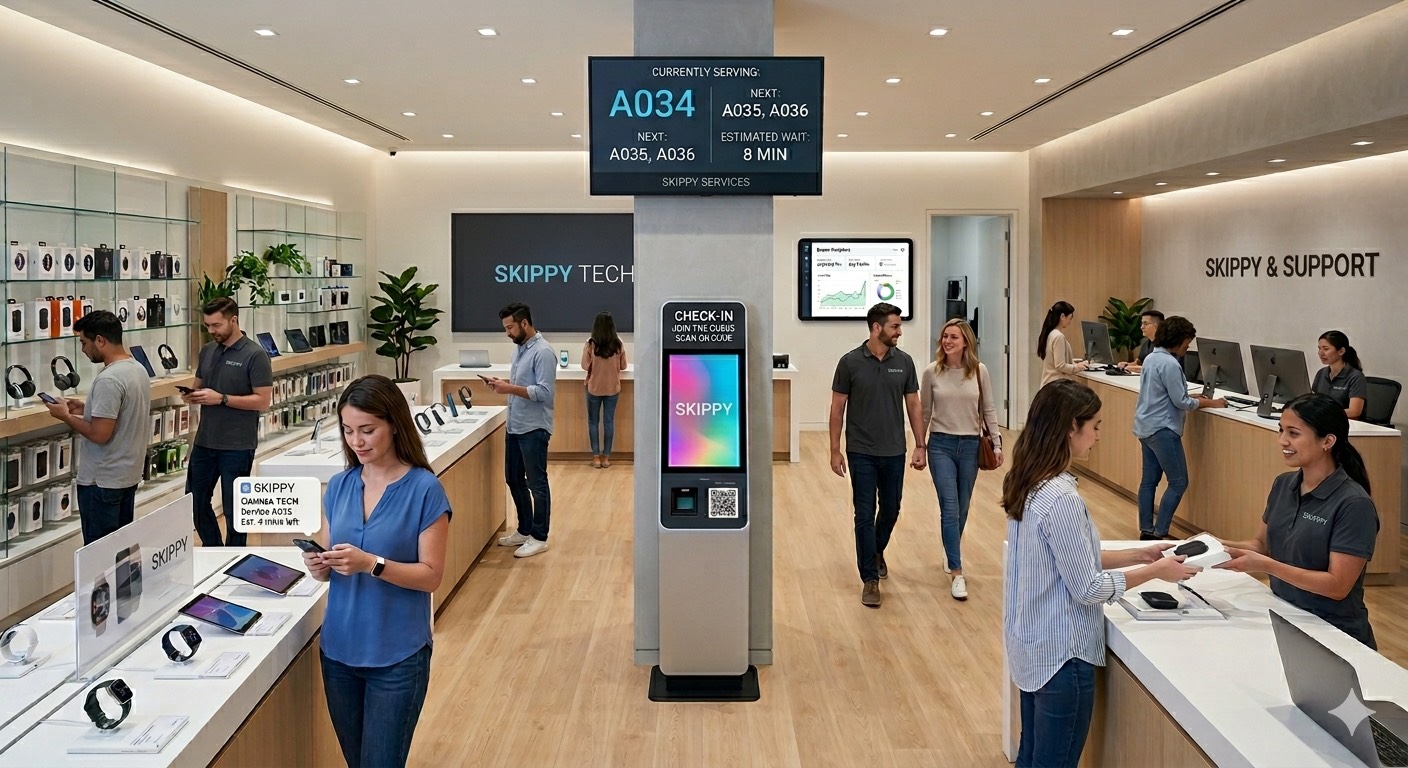
Retail success increasingly hinges on how smoothly customers flow through a store. Modern shoppers are impatient, and long waiting lines aren’t just an inconvenience—they’re a direct threat to revenue. Queue management software (QMS) offers a data‑driven way to shorten waits, reduce walkaways, and turn idle time into buying time. For revenue‑focused retailers, selecting the best queue management software to boost revenue and keep customers happy is now a strategic decision rather than a tech upgrade. This definitive guide explains why queues control your conversion rate, what features matter most, and how trusted providers like Skiplino help retail brands turn seamless service into measurable profit.
The strategic importance of modern queue management in retail
Queue management software refers to digital systems that organize customer lines, often through remote check‑ins, virtual queues, and real‑time analytics that improve service efficiency.
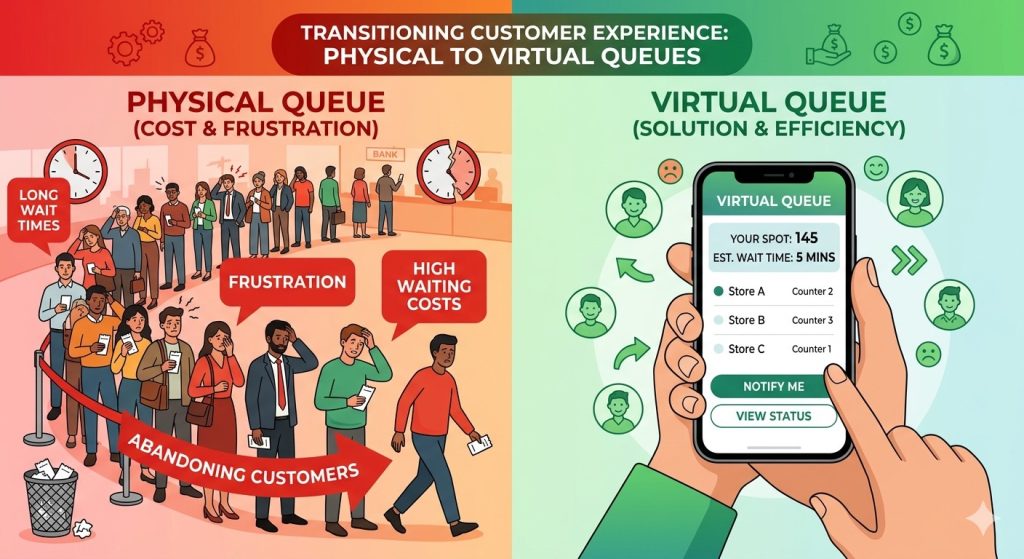
Even slight delays can have outsized impacts: increasing the average wait from 5 to 30 minutes can nearly triple customer abandonment. Conversely, shortening actual or perceived wait times by just a few minutes can recover up to 20% of lost customers—directly boosting conversion rates and Net Promoter Scores.
Virtual queue systems add another revenue lever by letting customers browse while they wait. Instead of standing idle, they continue shopping, often making additional unplanned purchases. In a landscape where every interaction affects trust and spend, queue management has become an essential tool for reducing abandonment, improving service rhythm, and maximizing retail profitability.
Key features of queue management software for retail success
A high‑performing QMS combines convenience, flexibility, and data visibility. The following features enable real‑world retail impact:
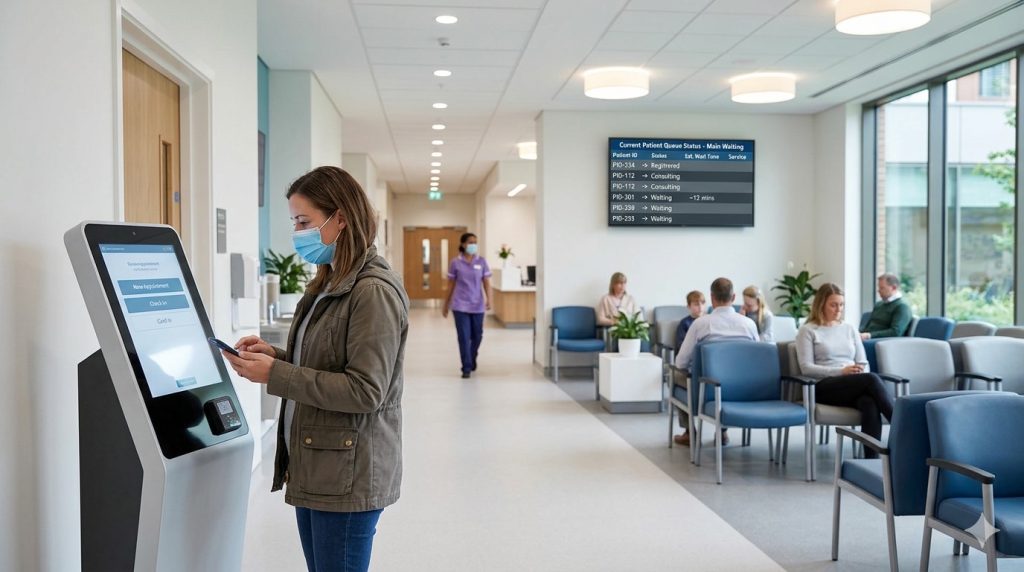
- Virtual and remote check‑in through mobile links, QR codes, or self‑service kiosks.
- Automated notifications such as SMS and push alerts that keep customers informed and engaged.
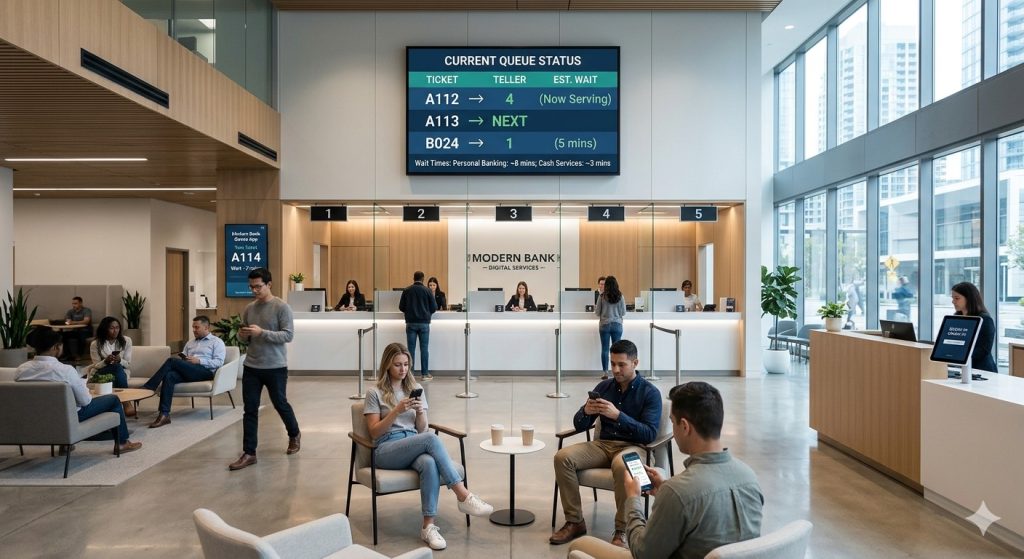
- Digital signage and in‑store displays for real‑time queue status.
- Centralized dashboards offering visibility across multiple branches.
- AI‑powered analytics that forecast staffing needs, surface bottlenecks, and alert managers before queues grow too long.
| Feature | Ideal for Small Retail | Ideal for Enterprise |
|---|---|---|
| Mobile/QR check‑in | ✔ Quick setup | ✔ Integrated branding |
| Multi-location dashboard | Optional | Essential |
| AI queue analytics | Nice-to-have | Must-have |
| Digital signage | Optional | Standard |
| CRM/POS integration | Optional | Required |
By combining these capabilities, retailers achieve both operational clarity and a smooth, purchase‑friendly experience for every visitor. Platforms like Skiplino combine these elements in a unified interface designed for rapid deployment and measurable results.
How queue management software drives revenue growth
Efficient queue management has a quantifiable effect on income. Studies show that up to 20% of retail customers leave if they wait more than three minutes. Reducing that friction directly converts visitors into buyers.
Beyond retention, QMS tools create upsell potential. Virtual queues and digital signage promote products and enable staff to focus on meaningful, value‑adding interactions. This practice—known as customer flow optimization—maximizes throughput and satisfaction simultaneously.
Additional revenue drivers include:
- Encouraging impulse purchases while queueing virtually.
- Using analytics to target high-margin products and services.
- Enhancing staff utilization for more consistent upselling.
In short, a modern QMS turns idle waiting into active revenue.
Selecting the right queue management solution for your retail business
Choosing queue software should align with your retail scale, operational model, and customer flow patterns.
Smaller retailers often benefit from lightweight, mobile‑first tools featuring QR check‑in and simple dashboards. Enterprises, however, require comprehensive suites with AI forecasting, multi‑location management, and deep analytics integration.
Prioritize features such as:
- Real‑time dashboards and alerts.
- Multi‑channel check‑in (kiosk, mobile, SMS).
- Multi‑branch analytics.
- Integrated POS and CRM connectivity for unified insights.
When evaluating ROI, ensure the solution’s cost correlates with measurable gains in conversions and reduced wait‑related attrition. A provider like Skiplino delivers scalable tiers to match both independent stores and enterprise networks.
Step-by-step implementation guide for retail queue management
A structured rollout helps ensure fast adoption and accurate performance tracking:
- Map the customer journey and baseline data (arrival, wait, and abandonment rates).
- Select and configure software that matches your retail segment.
- Integrate with existing systems—POS, CRM, and staff scheduling tools.
- Pilot in a few stores for 4–8 weeks, using digital displays or mobile check‑in.
- Train staff on usage and escalation processes.
- Measure results, refine alert settings, and scale chain‑wide via centralized dashboards.
Cloud‑based platforms like Skiplino deploy within one to two weeks and require minimal technical setup, enabling both independent retailers and large chains to start seeing results quickly.
Operational best practices to maximize queue management impact
Sustained success depends on continuous optimization:
- Combine virtual queues with appointment slots during high‑volume periods.
- Use AI demand forecasting to adjust staffing before congestion appears.
- Gather periodic feedback to fine‑tune service efficiency.
- Benchmark wait times under four minutes to keep abandonment below 10%.
These practices reinforce customer trust and maintain the consistency modern shoppers expect.
Measuring and analyzing queue management performance
Performance analytics transform queues into actionable insights. Core KPIs include average wait time, abandonment rate, conversion uplift, and staff utilization.
| KPI | Definition | Target Benchmark |
|---|---|---|
| Average Wait Time | Total waiting duration per customer | Under 4 minutes |
| Abandonment Rate | % of customers leaving before service | Below 10% |
| Conversion Uplift | Increase in completed transactions post‑QMS | +5–15% |
| Staff Utilization | % of time staff actively assisting customers | 80–90% |
Platforms like Skiplino’s Skiplytics unify these metrics across locations, enabling weekly performance reviews and data‑driven staffing or layout adjustments.
Integrations and technical considerations for retail QMS
Today’s queue systems must connect seamlessly with broader operational tools. Integration with POS and CRM systems links queue data to sales and customer records, helping teams analyze full‑journey performance.
An API‑accessible solution allows for custom workflows and third‑party integrations without complex development. Cloud‑based deployments offer quicker scalability and easier maintenance than on‑premise versions, though large retailers may combine both for hybrid control.
Hardware add‑ons—such as kiosks and displays—remain optional but valuable in high‑traffic environments where visibility and convenience matter most.
Pricing models and cost considerations for retail queue management
Most queue management platforms follow subscription‑based pricing, charging by store, user, or month. Entry‑level plans suit smaller retailers exploring digital queuing, while enterprise tiers integrate analytics, APIs, and dedicated support.
| Business Size | Monthly Range | Core Features |
|---|---|---|
| Small Retail | $30–$150 | Mobile check‑in, basic analytics |
| Mid-Sized | $150–$500 | Multi‑channel access, dashboards |
| Enterprise | $500–$1500+ | Integrated AI, advanced reporting, multi‑branch control |
Evaluate total cost of ownership in light of expected ROI—from reduced staff overtime to recovered sales through fewer walkaways. With Skiplino, predictable pricing and quick setup minimize overhead while driving measurable efficiency gains.
Future trends shaping queue management software in retail
Emerging innovations are redefining retail queue management:
- AI predictive analytics for demand and staffing.
- Behavioral insight detection through camera or sensor data.
- Expansion of contactless, mobile‑first queue participation via QR and SMS.
- Unified, omnichannel dashboards merging in‑store and online customer flow.
Retailers adopting these technologies early will sustain a competitive edge as expectations for speed, personalization, and convenience continue to climb. Skiplino continues advancing in these areas, helping businesses prepare for next‑generation retail flow management.
Frequently asked questions about queue management software for retail
What is queue management software and how does it benefit retail?
Queue management software digitally organizes customer lines, estimates wait times, and optimizes staff use—reducing walkaways and increasing sales through faster, more consistent service.
How do I set up an effective queue management system?
Map your customer flow, choose a cloud platform such as Skiplino, connect key systems, and train staff. Implementation typically takes less than two weeks.
What features should retail businesses prioritize in a QMS?
Focus on mobile check‑in, real‑time dashboards, automated alerts, digital signage, and robust analytics for multi‑site control.
Can queue management systems handle multi-location retail operations?
Yes. Scalable platforms like Skiplino provide centralized dashboards and analytics for unified oversight across all locations.
How does queue management software help reduce customer walkaways and increase sales?
By keeping customers informed and mobile during waits, QMS reduces perceived delays and encourages continued shopping—directly improving conversion rates.
Latest
Similar Reads


![What Does Queued Mean? Definition, History, and More [GUIDE]](https://5012494.fs1.hubspotusercontent-na1.net/hub/5012494/hubfs/what-does-queued-mean-a-guide.jpg "What Does Queued Mean? Definition, History, and More [GUIDE]")
All Rights Reserved @2026 Skiplino Technologies WLL.


Hi!
What are you planning to do?