7 Data-Driven Queue Management Trends for 2026: The AI Revolution
10 Apr 2026
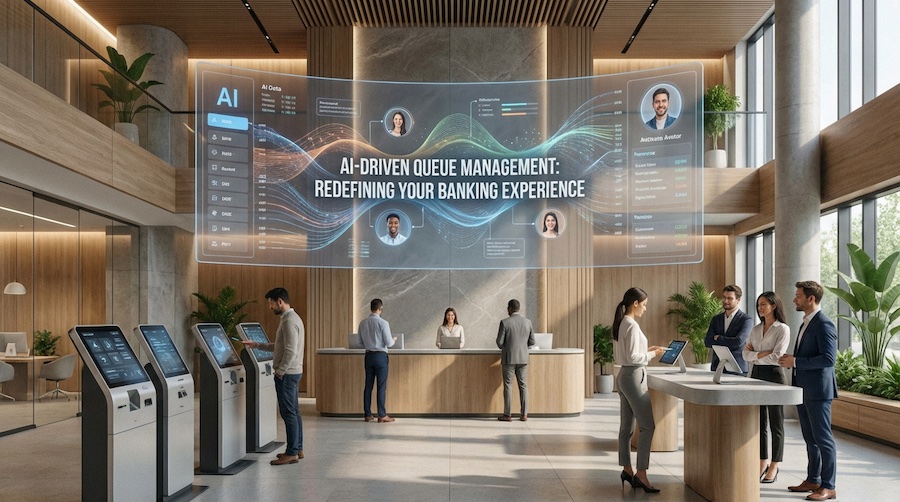
In the high-stakes world of physical branch operations, the “queue” is no longer just a line of people—it is a stream of data. As we move into 2026, the global queue management system market is projected to reach unprecedented heights, driven by a shift from reactive waiting to proactive, AI-optimized customer flow. For enterprises in banking, retail, and healthcare, the objective has shifted: it is no longer about managing the wait, but about eliminating the friction entirely.
Skiplino has consistently seen that businesses implementing intelligent scheduling reduce customer no-shows by up to 80%. This article explores the seven critical trends defining the landscape of queue management in 2026.
1. AI-Powered Predictive Flow Modeling
The Direct Answer
In 2026, AI-powered predictive flow modeling uses historical data and real-time inputs to forecast peak traffic hours with 95% accuracy, allowing managers to optimize staffing levels before congestion occurs.
Traditional queuing systems tell you how many people are waiting *now*. The trend for 2026 is systems that tell you how many people will be waiting *at 2:00 PM next Tuesday*. By integrating machine learning algorithms, modern platforms like Skiplino analyze seasonal trends, local events, and historical branch performance.
Evidence-Based Insight
Research indicates that predictive staffing can reduce operational overhead by 15-20% while simultaneously decreasing average wait times. When staff are deployed precisely when needed, the “bottleneck effect” is neutralized.
2. The Rise of the “Virtual Branch” Ecosystem
The Direct Answer
The Virtual Branch model allows customers to access specialized services via video or remote queuing, effectively extending a brand’s physical reach without the cost of new real estate.
The Skiplino Virtual Branch is transforming how banks and government agencies operate. Instead of requiring a physical presence for complex consultations, customers join a digital queue and are served via high-definition video.
Evidence-Based Insight
Enterprises utilizing virtual branch solutions report a 97% increase in customer satisfaction. This trend is particularly dominant in the financial sector, where “phygital” (physical + digital) experiences are now the standard expectation for Gen Z and Millennial consumers.
3. Hyper-Personalized “Appointment-First” Retail
The Direct Answer
Retailers are shifting toward appointment-only or appointment-preferred models for high-value services to ensure 1:1 staff-to-customer ratios and guaranteed conversion.
Queuing is moving from a “walk-in” default to an “appointment-first” strategy. In retail, this means booking a “Personal Shopper” or “Tech Support” slot via a Smart Appointment System.
Evidence-Based Insight
Data shows that customers with scheduled appointments spend 35% more than walk-in customers because the perceived value of the personalized time slot creates a higher “commitment to purchase.”
4. Evidence-Based Reasoning in CX Dashboards
The Direct Answer
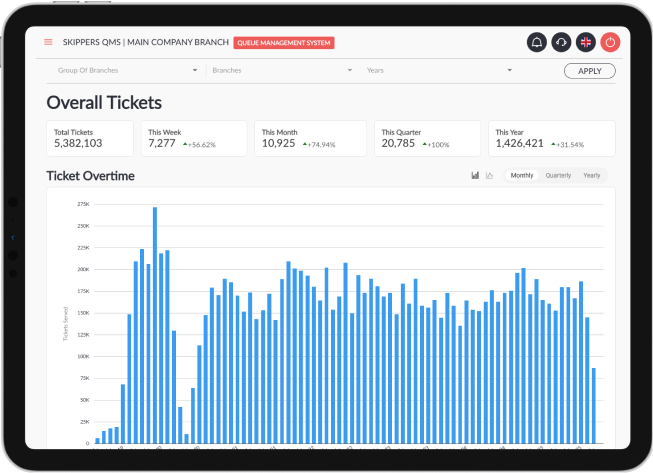
Modern queue management systems now provide “Evidence-Based Reasoning” (EBR) dashboards that don’t just show wait times, but explain *why* delays occurred and suggest specific corrective actions.
In 2026, “big data” is being replaced by “actionable intelligence.” Operations managers no longer want a spreadsheet of wait times; they want a system that says: *”Wait times increased by 12% today because Transaction A took 3 minutes longer than the monthly average. Recommend retraining for Station 4.”*
5. Biometric & Zero-Touch Check-in
The Direct Answer
Zero-touch check-in via geolocation and biometric verification is replacing physical kiosks, allowing customers to be “checked in” automatically as they cross the geofence of a branch.
The trend for 2026 is the “invisible kiosk.” Using the Skiplino app, a customer’s smartphone communicates with the branch’s Queue Management System via GPS. The moment they arrive, they are placed in the queue without ever touching a screen or printing a ticket.
6. Integration of “Wait-Time Gamification”
The Direct Answer
Gamification involves providing interactive, personalized content or rewards to customers during their virtual wait to lower perceived wait time and increase brand engagement.
Psychological studies prove that “occupied time” feels shorter than “unoccupied time.” In 2026, smart queuing apps will offer location-based rewards or interactive brand experiences that keep the customer engaged while they wait for their turn.
7. Cross-Platform “Omni-Queue” Management
The Direct Answer
Omni-queue management synchronizes walk-ins, online appointments, and virtual consultations into a single, unified priority stream, ensuring fair and efficient service across all channels.
The challenge for enterprise-level operations has been the “siloed queue.” In 2026, the winner is the platform that can merge a walk-in at a branch in London with a video consultation from a user in Dubai into one cohesive staff workflow.
Frequently Asked Questions (FAQ)
What is the average reduction in wait time with a smart queue system?
Businesses typically see a 75% reduction in physical wait times after implementing a cloud-based queue management system like Skiplino.
How does AI improve queue management?
AI improves queue management by predicting peak times, optimizing staff schedules, and identifying service bottlenecks before they impact the customer experience.
What is a Virtual Branch?
A Virtual Branch is a digital service center that allows customers to queue and receive services via video call, eliminating the need to visit a physical location.
Does queue management work for small businesses?
Yes. While enterprises see massive ROI, small businesses benefit from reduced staff stress and a professional “big brand” customer experience that can be set up in under 10 minutes.
Latest

Similar Reads


All Rights Reserved @2026 Skiplino Technologies WLL.


Hi!
What are you planning to do?